
CDs, then DVDs, then came the cloud, and few folks worried about slipping a disk into a drive to store data. Many laptops no longer have DVD drives in them because USB thumb drives store more, are simpler devices, and can plug into most computers that have USB ports. Discs may be back, at least for limited applications.
“The researchers suggest their new optical disc can enable a data center capable of exabit storage—a billion gigabits—inside a room instead of a stadium-size space.” – IEEE Spectrum
In case you haven’t noticed it or thought about it, the big tech corporations have built and operate massive data centers, warehouses for the data we create whenever we share a photo, save a document, or build an online store. Social media sites tend to store all of our posts, which increases as posts went from texts to adding photos to adding 360s and videos. Online meetings that are saved have to be stored somewhere. The storage required drives infrastructure requirements that are extreme: siting data centers in the desert for solar power, sinking some data sites because water keeps things cool, etc.
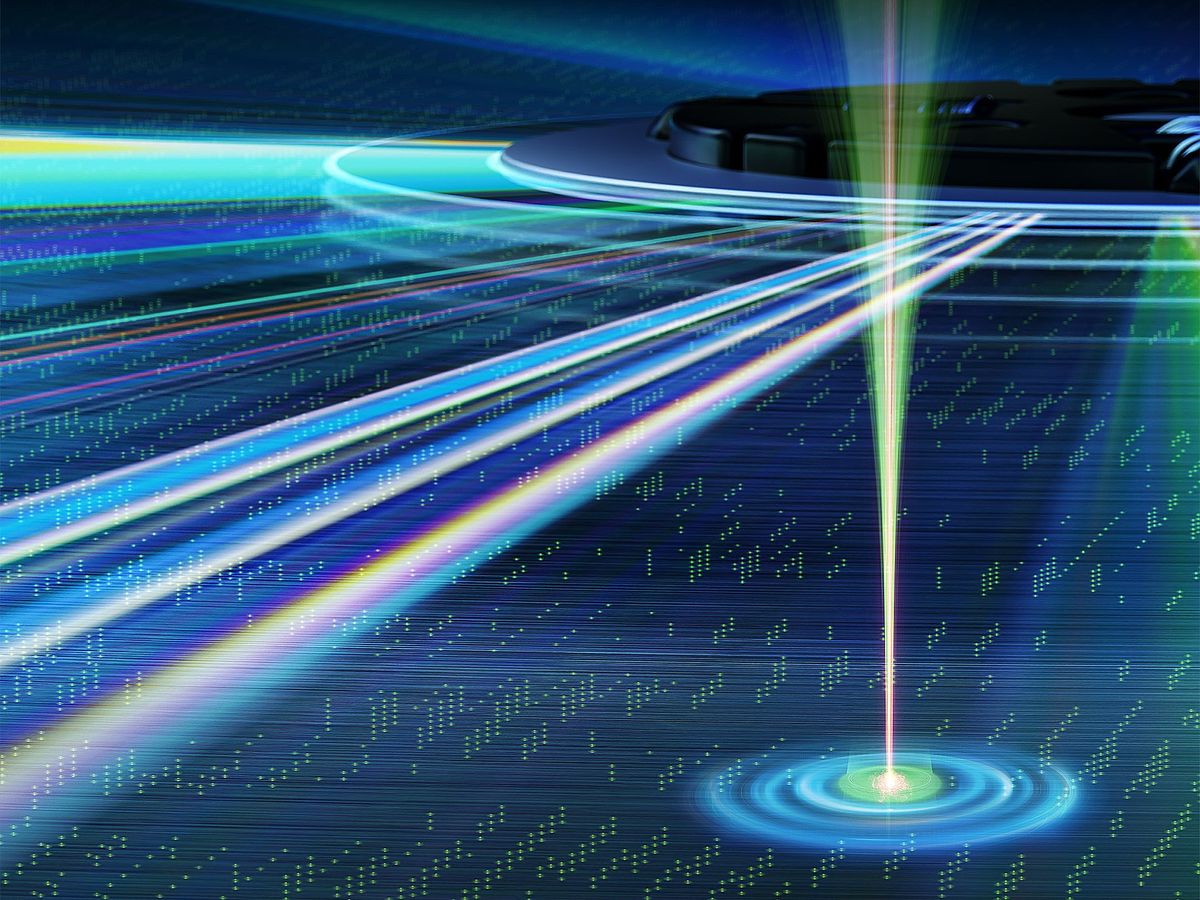
The first floppies couldn’t even hold one photo from today’s phones. (Ah yes, 440K on the original Macintosh?) CDs store ~700M. (1M = 1,000 K) DVDs store ~7G (1G = 1,000M) By developing a 3D disc and using multiple lasers, they can now store 1.6 million Gigabits, 1,600,000 G.
While that is a technical achievement, it also has the potential to dramatically reduce the infrastructure, power requirements, cooling requirements, and simply the size of the required facilities. A simple, well, not-so-simple disc may, as quoted above, reduce the size from a stadium to a room. Smaller size, less power, smaller impact. That sounds similar to the days when building-sized mainframes shrunk to the size of refrigerators, then down to a desktop, then to a laptop, and now to a phone.
Will we enjoy the benefits of a smaller system, or will our needs expand to use up all of that capacity, or will yet another paradigm shift in our technological society?
 Pretending Not To Panic
Pingback: Data That Matters February 2024 | Pretending Not To Panic