
Sad to say, but the term ‘deaths of despair’ is becoming more common. US society is no longer simply bifurcating. There are schisms across many societal measures. A new report chronicles a difference in life expectancy based on education and resulting social status.
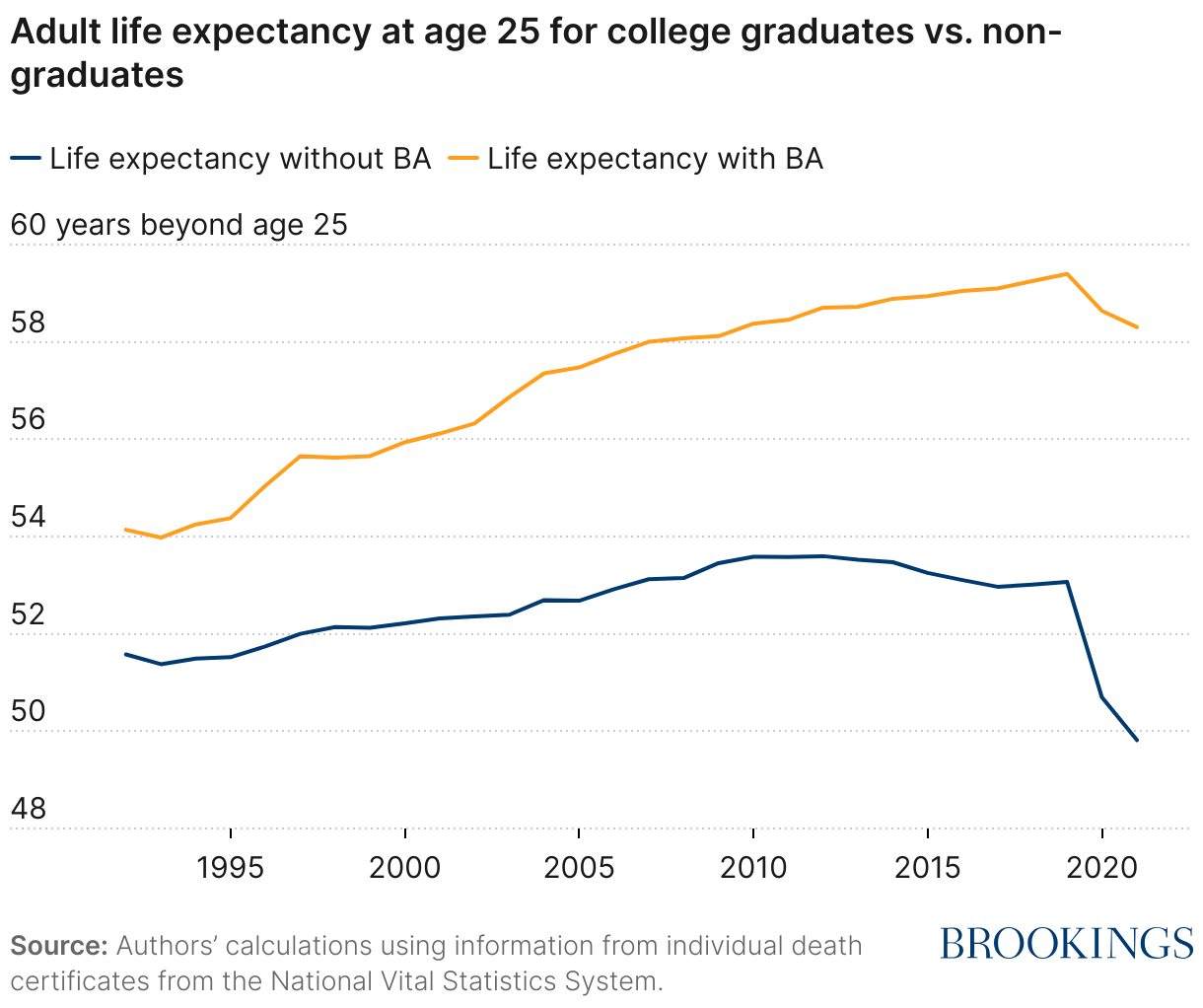
“They found that life expectancy for the college educated in 2021 was eight-and-a-half years longer than for the two-thirds of American adults without a bachelor’s degree. That’s more than triple the 1992 gap of about two-and-a-half years.” – Brookings
Education correlates with wealth, wealth correlates with health, bad health can lead to death. Despair has become more common among those struggling. Coping mechanisms can become too much of a good thing, or a not-so-bad thing. There has been a “dramatic rise in deaths among working class people from suicide, drug overdoses, and alcoholism.”
Even as better treatments and health care options become available, they are not as available to those who can’t afford the treatments, or the time to be treated, or the time to see a care-giver, or are homeless and have no way to safely store medications.
The US GDP is doing well, but those who don’t have enough are dying sooner than those with more than enough.
Side note: Contrary to many other developing nations, US life expectancy is declining across all wealth classes, more so for those without college degrees.
 Pretending Not To Panic
Pingback: Data That Matters | Pretending Not To Panic